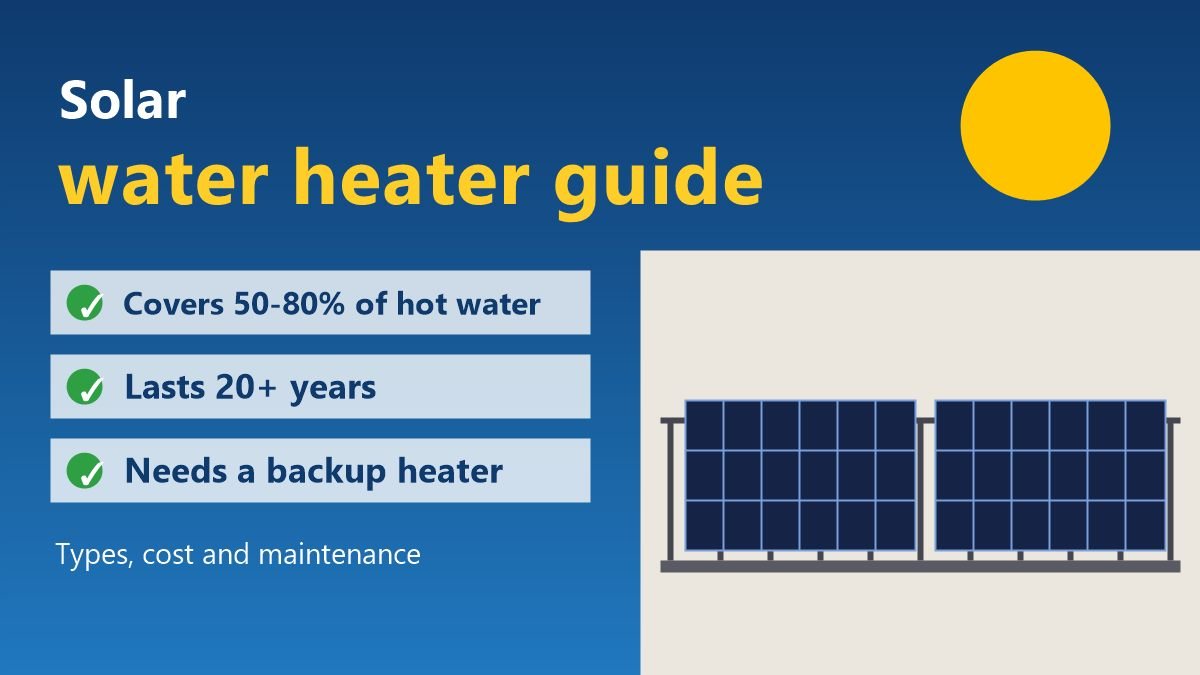
Quick answer – solar water heater: A solar water heater uses collectors on the roof to capture the sun’s heat and warm your household water directly. A well-designed system can cover roughly 50 to 80% of your hot water needs, depending on climate and size. You still need a backup (gas, electric or heat pump) for cloudy days. Systems last 20 years or more and work best in sunny, warm regions.
Solar panels make electricity, but the sun’s heat can also warm water directly and very efficiently. In this guide we explain how a solar water heater works, which types exist, what it costs and how to decide whether it suits your home.
How does a solar water heater work?
Every solar water heater has two main parts: collectors that absorb sunlight and turn it into heat, and an insulated storage tank. Water or a heat-transfer fluid flows through the collectors, picks up heat and carries it to the tank. When you open a hot tap, you use that solar-heated water. If it is not hot enough, a backup heater tops it up.
Types of solar water heaters
| Type | How it works | Best for |
|---|---|---|
| Active direct | pumps circulate household water through the collectors | mild climates with rare frost |
| Active indirect | pumps circulate antifreeze fluid; a heat exchanger warms the water | cold climates |
| Passive thermosiphon | warm water rises naturally into a tank above the collector | warm, sunny regions |
| Passive batch (ICS) | the tank itself sits in the sun inside an insulated box | warm climates, simple setups |
Collectors come as flat-plate panels, which are robust and affordable, or evacuated tubes, which lose less heat in cold or windy weather.
How much does a solar water heater cost?
A solar water heater typically costs several thousand dollars installed, more than a conventional water heater. Prices depend on the type, collector area, tank size and roof work. In return, the sun provides much of the energy for free for decades. Check local utility rebates, which can reduce the upfront cost.
Solar water heater vs. solar panels with a heat pump water heater
Many homeowners now compare a solar water heater with a combination of rooftop solar panels and a heat pump water heater. Solar thermal collectors convert a larger share of sunlight into heat, but photovoltaic panels are more flexible: their electricity can also power the rest of the house, charge a battery or be exported. For homes that already plan solar panels, the heat pump route is often simpler. For sunny homes with high hot water demand and no solar panels, a solar water heater remains a very efficient option.
Is a solar water heater worth it?
- Good fit: sunny climate, south-facing roof (north-facing in the southern hemisphere), large family, high hot water use, expensive electricity or gas.
- Less suitable: shaded roof, low hot water use, very cold winters without a suitable indirect system.
A simple check: estimate your yearly water heating cost and multiply it by the solar share you can expect. If that annual saving pays back the extra cost within 10 years or less, the system is usually a good investment.
Maintenance tips
- Inspect collectors and pipes once a year for leaks and damaged insulation.
- Check antifreeze fluid in indirect systems every 3 to 5 years.
- Flush the tank to remove sediment, especially with hard water.
- Keep collectors free of shade from growing trees.
Sources and further reading
Conclusion: should you buy a solar water heater?
A solar water heater turns free sunshine into hot water and can cover most of your needs in a sunny climate. It costs more upfront and needs a backup, but it lasts for decades. Compare it with solar panels plus a heat pump water heater, check rebates, and choose the solution that fits your roof, climate and hot water use.
Frequently asked questions
Does a solar water heater work on cloudy days?
It still collects some heat, but much less. A backup heater makes sure you always have hot water.
How long does a solar water heater last?
Well-maintained systems typically last 20 years or more.
Can a solar water heater freeze?
Direct systems can. In cold climates, choose an indirect system with antifreeze fluid or a drain-back design.
How much hot water can a solar water heater provide?
Typically 50 to 80% of a household’s yearly hot water, depending on climate, collector size and use.